
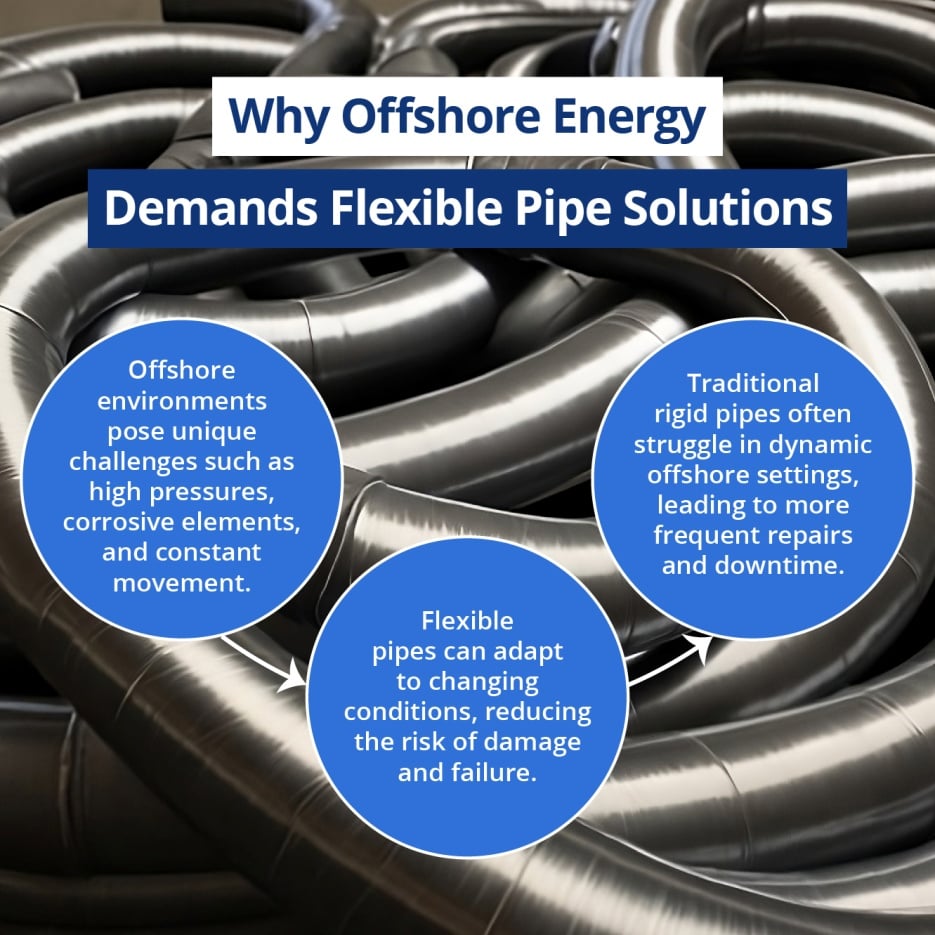
As the demand for offshore energy applications grows, so does the need for equipment that can withstand the complex demands of deep-sea environments. Harsh ocean conditions, high pressures, and corrosive substances pose serious challenges for pipelines in the offshore sector.
Traditional metal pipes, once the industry standard, often fall short of meeting these rigorous demands without frequent maintenance or replacement. This need for reliable and durable piping solutions is why API 17J flexible pipes have become a breakthrough for offshore energy applications, transforming how we approach subsea transportation of resources.
At CNPS, we specialize in providing cutting-edge energy solutions, including innovative piping systems like API 17J flexible pipes, specifically designed to withstand the unique challenges of offshore environments. This blog will explore the properties, benefits, and applications of these revolutionary flexible pipes, showcasing why they are an ideal choice for offshore energy and offshore wind power equipment.
Why Flexible Pipes are Crucial for Offshore Energy
The offshore energy industry operates in one of the most extreme environments on the planet, where the effects of high pressures, heavy loads, and exposure to corrosive materials like saltwater can cause conventional materials to degrade quickly. The need for reliable piping that can resist these forces is crucial, and that’s where flexible pipes come in.
Unlike traditional rigid piping, flexible pipes allow a higher degree of movement without compromising their structural integrity. This flexibility is essential to absorb the movements caused by currents, waves, and equipment handling, especially in deep-sea operations where the ocean floor is constantly shifting.
API 17J flexible pipes were developed to meet these exact requirements. They provide the durability and resilience needed to ensure the safe and efficient transportation of oil, gas, and other resources in offshore fields. But what makes API 17J pipes so unique?
API 17J Flexible Pipes: Built for Performance and Reliability
API 17J flexible pipes are engineered to provide optimal performance in offshore conditions. Their unique construction uses layers of high-quality materials to ensure strength, flexibility, and resistance to corrosion.
Unlike conventional FRP pipes, API 17J flexible pipes are crafted with a composite material that includes high-strength fibers and epoxy resin wound meticulously in micro-controlled processes. This combination of materials provides exceptional resistance to corrosion and allows the pipe to handle high-pressure environments without risk of delamination or structural failure.
In terms of functionality, API 17J flexible pipes offer several key advantages:
- Pressure Resistance: Engineered to withstand intense pressures common in deep-water applications, these pipes maintain their integrity even under high-stress conditions.
- Corrosion Resistance: The materials used in API 17J pipes are inherently resistant to corrosive elements, including saltwater and chemicals, making them ideal for long-term use.
- Flexibility: Unlike rigid pipes, these flexible pipes allow for movement and adjust to changes in underwater terrain, currents, and other environmental factors.
- Low Maintenance: Due to their durability and resistance to wear, API 17J flexible pipes require less frequent maintenance than traditional metal pipes.
Key Applications for API 17J Flexible Pipes in Offshore Energy
With the rise of offshore oil, gas, and wind power projects, flexible composite pipes have found diverse applications. Here are some of the main ways API 17J flexible pipes are revolutionizing offshore energy:
1. Subsea Oil and Gas Transportation
API 17J flexible pipes are designed to safely transport hydrocarbons, providing a highly durable solution for moving oil and gas from underwater wells to processing facilities. Their robust construction enables them to carry these resources even in extreme depths and conditions, where conventional pipes might fail. The flexibility of API 17J pipes allows for easier installation in areas with uneven seabed topography, reducing the need for complex routing or supports.
2. Offshore Wind Power Equipment
As the offshore wind energy sector grows, so does the need for reliable pipes to manage the transportation of fluids involved in the cooling and lubrication of equipment, as well as transmission lines. API 17J flexible pipes provide a lightweight and corrosion-resistant solution, which is critical when working with offshore wind power equipment exposed to saltwater and other harsh conditions.
3. Umbilicals for Subsea Control Systems
In offshore energy applications, umbilicals are used to deliver control fluids, power, and communications to subsea production systems. API 17J flexible pipes are ideally suited for use in umbilicals, as their flexibility allows for effective handling and placement in confined spaces. Additionally, the high-pressure rating of API 17J pipes ensures reliable delivery of fluids and power, enabling precise control over remote subsea equipment.
4. Risers for Floating Production Units
Floating production units (FPUs) require durable risers to connect the seabed well to the surface facility. Due to their constant movement with ocean currents, FPUs need risers that can withstand bending, twisting, and exposure to saltwater. API 17J flexible pipes provide a solution that accommodates the dynamic positioning of FPUs, reducing stress on connections and preventing leaks or breaks caused by repetitive motion.
Advantages of API 17J Flexible Pipes Over Conventional Solutions
API 17J flexible pipes offer a range of benefits that set them apart from traditional piping options:
- Adaptability: API 17J pipes’ flexibility allows them to adapt to movements and avoid damage from seismic shifts, ocean currents, or equipment vibrations.
- Ease of Installation: Flexible pipes require fewer joints and supports, making installation faster and less costly than rigid pipe solutions.
- Enhanced Longevity: Their durability in harsh conditions translates to fewer replacements and repairs, which means lower operational costs over the lifecycle of an offshore project.
- Lightweight Design: Compared to metal piping, API 17J flexible pipes are lighter, which reduces transportation and handling costs during installation.
- High Fatigue Resistance: These pipes are built to endure repetitive stress without compromising performance, making them ideal for applications where constant bending and movement are involved.
The Future of Offshore Energy: Why API 17J Flexible Pipes Matter

With the rapid growth in offshore energy applications, including offshore wind power equipment and subsea oil and gas fields, the need for reliable and flexible pipeline solutions is greater than ever.
The environmental impact of leaks or failures in offshore pipelines is significant, making durability and reliability paramount. API 17J flexible pipes address these concerns directly, offering a resilient, low-maintenance solution that supports sustainable energy production and reduces environmental risks.
The growing emphasis on renewable offshore resources, such as wind and wave energy, further highlights the importance of adaptable, corrosion-resistant piping solutions. API 17J flexible pipes not only improve operational efficiency but also support global efforts to reduce carbon emissions by enabling more reliable renewable energy infrastructure.
How CNPS Supports Offshore Energy with API 17J Flexible Pipes
At CNPS, we are committed to advancing offshore energy solutions by providing products that meet the highest standards of performance and reliability. Our API 17J flexible pipes are carefully engineered to support the specific requirements of offshore environments, from subsea oil and gas transportation to offshore wind power applications.
By leveraging cutting-edge materials and manufacturing processes, we deliver flexible pipes that stand up to the harsh conditions of offshore operations, helping our clients maintain productivity while reducing operational risks.
Experience the Future of Offshore Piping with CNPS
In today’s rapidly evolving offshore energy industry, the ability to adapt and innovate is crucial. API 17J flexible pipes are a prime example of how advances in technology can transform operations, enabling safer and more efficient energy production in challenging environments. Are you ready to enhance your offshore energy applications with a pipeline solution that delivers unmatched performance and resilience?
At CNPS, we offer a wide range of products designed to support the unique demands of offshore energy applications. From flexible composite pipes to advanced equipment for offshore wind power, our solutions are engineered to keep your operations running smoothly and securely. By choosing CNPS, you’re investing in quality, reliability, and a partner dedicated to your success in offshore energy. Explore our products today and discover how we can help you achieve excellence in even the toughest offshore environments.


