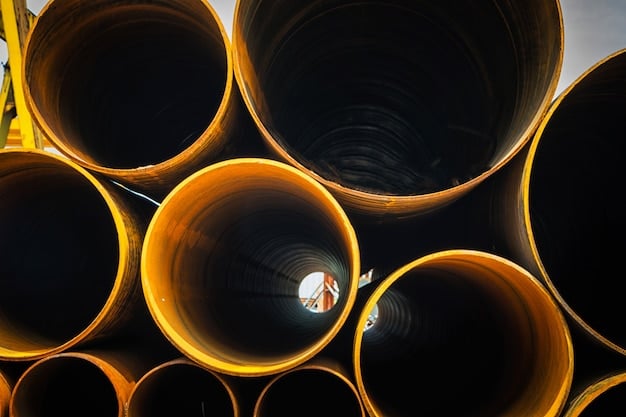
Pipes play a crucial role in the oil and gas industry, where safety, efficiency, and durability are paramount. Among the different categories of pipes, API (American Petroleum Institute) pipes are a significant component due to their high standards, precision manufacturing, and stringent specifications.
These pipes, used extensively in upstream, midstream, and downstream operations, are designed to withstand extreme pressures, temperatures, and corrosive environments, making them indispensable in the oil and gas sector.
What Are API Pipes?
API pipes are manufactured to meet rigorous API standards to ensure they can handle the demanding conditions of oil and gas operations, such as deep drilling, high-pressure fluid transportation, and exposure to harsh chemicals. API’s specifications also focus on consistency in pipe quality across manufacturers, enhancing the safety and reliability of pipelines worldwide.
API Pipe Standards
API pipes are designed based on standards that ensure their compatibility, safety, and reliability in the oil and gas industry. The most common API standards related to pipes include API 5L, API 5CT, API 15LRand API17J, among others. Each standard pertains to specific types of pipes, designed for particular purposes, environments, and stress tolerances.
API 5L: This standard covers seamless and welded steel line pipes used in pipelines for the transportation of gas, water, and oil. API 5L pipes are primarily used for high-pressure environments and are categorized into two product specification levels (PSL1 and PSL2), each with distinct mechanical and chemical requirements.
API 5CT: This standard is focused on casing and tubing pipes used in oil wells. API 5CT pipes serve as protective layers that prevent well walls from collapsing and allow for the extraction of oil and gas. These pipes also come in various grades depending on the required toughness, corrosion resistance, and material strength.
API 15LR: This standard deals with fiberglass reinforced plastic (FRP) pipes, which are increasingly used in environments where corrosion resistance is a high priority. These pipes are lightweight, highly resistant to corrosion, and primarily used in transporting fluids in oil and gas production.

API 17J: API 17J is a specification that covers the design and manufacture of flexible pipe systems used in offshore oil and gas production. These pipes are designed to withstand high pressure, extreme temperatures, and corrosive environments, making them ideal for deepwater and subsea applications.
API 17J flexible pipes offer significant advantages, such as ease of installation, resistance to fatigue, and adaptability to complex offshore layouts, ensuring reliable performance in challenging marine environments.
Each API standard defines the testing, material selection, and dimensional tolerances required for pipes to ensure optimal performance in the field. Selecting the right type of API pipe requires understanding these standards, as well as the specific needs of the environment where the pipe will be used. With extensive experience in the field, specialists at CNPS can help you make the right decision.
Call now to schedule a consultation.
Types of API Pipes

API Line Pipes
API line pipes, covered by API 5L, are primarily used for transporting oil, gas, and water across long distances. Line pipes are manufactured in two forms: seamless and welded.
Seamless Line Pipes: These pipes are made without a seam, offering greater strength and the ability to withstand higher pressures compared to welded pipes. Seamless pipes are generally preferred in environments where failure due to pressure would be catastrophic, such as deep-sea pipelines or highly pressurized oil fields.
Welded Line Pipes: Welded pipes, created by welding the edges of steel plates together, are less costly than seamless pipes and are ideal for lower-pressure applications. They are more commonly used in above-ground pipelines or in locations where high strength isn’t a necessity.
Line pipes are categorized into two product specification levels: PSL1 and PSL2. PSL1 is a standard quality level that covers pipes for general transportation use, while PSL2 has more stringent quality control and is used in critical applications requiring higher toughness and durability. API 5L line pipes come in various grades such as X42, X52, X60, and X80, where the numbers indicate the minimum yield strength of the pipe in kilopounds per square inch (KSI).
Recommended Read: The Benefits of API 15LR and API 15HR Pipes in Drilling Operations
API Casing Pipes
Casing pipes, governed by the API 5CT standard, are used to stabilize and protect the walls of oil and gas wells. They prevent the surrounding earth from collapsing into the well and provide a conduit for extracted materials to travel to the surface.
There are several types of casing pipes:
Surface Casing: The first layer of casing, typically used to prevent contaminants from seeping into groundwater and to provide a foundation for drilling deeper.
Intermediate Casing: Positioned between the surface casing and production casing, intermediate casing helps manage the pressure encountered at various depths during drilling.
Production Casing: This is the deepest casing in a well and runs from the surface down to the bottom of the well. It is designed to contain the extracted oil and gas as they travel upwards.
Casing pipes are graded based on their material strength, resistance to collapse, and corrosion resistance. Common grades include J55, N80, and P110, with each grade representing different strength levels suitable for specific well conditions.
API Tubing Pipes
Tubing pipes, also covered under API 5CT, are installed inside casing pipes and are responsible for the actual transportation of oil and gas from the reservoir to the surface. Unlike casing pipes, which are designed for well integrity, tubing pipes focus on the efficient flow of extracted resources.
Tubing must withstand significant internal pressure and the corrosive nature of the extracted fluids. Materials for tubing pipes are selected based on factors like pressure, temperature, and corrosive environments. Some tubing pipes are designed with specialized coatings to enhance their resistance to corrosion and wear.
API Drill Pipes
Drill pipes, although not covered by API 5L or 5CT, are essential components in the drilling process. Drill pipes are used to rotate the drill bit and allow drilling fluids to be circulated back to the surface. API 5DP is the standard that governs the manufacturing of drill pipes.
The unique nature of drill pipes requires them to be exceptionally strong, flexible, and durable to endure the high stresses of drilling through various subsurface layers. Drill pipes are usually categorized into grades such as E75, X95, and G105, indicating their tensile strength.
API Fiberglass Pipes
API 15LR pipes represent a class of fiberglass-reinforced pipes designed for environments with high corrosion risk, such as water injection systems, gas gathering, and sour service environments in the oil and gas industry. These pipes offer superior corrosion resistance compared to steel pipes and are lightweight, which makes them easier to install and handle.
Fiberglass pipes are less prone to corrosion caused by saline water, carbon dioxide, and hydrogen sulfide, making them an ideal choice for offshore oil platforms, chemical processing plants, and waste disposal systems. API 15LR pipes are also used where metal pipes are susceptible to chemical or electrochemical attacks, reducing long-term maintenance costs.

Key Applications of API Pipes in the Oil & Gas Industry
API pipes have a wide range of applications across the oil and gas industry, from exploration and extraction to transportation and refining. Some of the key applications include:
Drilling Operations
API pipes, especially API 5CT casing and tubing, are essential in drilling operations. Casing pipes stabilize the wellbore, preventing it from collapsing during drilling, while tubing pipes extract oil and gas from the well. The durability of API pipes allows them to withstand high pressures and resist corrosion from underground chemicals and gases.
Production
In the production phase, API casing and tubing pipes play a pivotal role. Casing pipes secure the well while tubing pipes extract the oil and gas. Tubing materials are selected based on their ability to withstand the internal pressure of the extracted fluids and their corrosion resistance, especially in sour gas or high-temperature environments.
Transportation of Oil and Gas
API 5L line pipes are widely used for transporting crude oil, natural gas, and refined petroleum products. These pipelines stretch over vast distances, connecting offshore rigs, refineries, and distribution networks. The reliability of API pipes ensures that oil and gas can be transported safely and efficiently, minimizing the risk of leaks or ruptures.
Enhanced Oil Recovery (EOR)
Enhanced oil recovery techniques, such as water injection, steam flooding, and gas injection, rely heavily on API pipes to transport and inject materials into oil reservoirs. API 15HR and 15LR fiberglass pipes, in particular, are often chosen for their corrosion resistance in EOR applications where aggressive chemicals are used.
Injection Wells
API 15LR fiberglass pipes are frequently used in injection wells for water or gas reinjection, where fluids are injected back into the reservoir to enhance oil recovery or maintain reservoir pressure. Their corrosion-resistant properties make them the preferred choice in these highly corrosive environments.
Subsea Applications
API pipes are also crucial for subsea operations, where they are used to transport oil and gas from offshore platforms to onshore processing facilities. These pipes must endure the high-pressure and low-temperature conditions found at ocean depths, making seamless API 5L pipes the ideal choice for such challenging environments.
Order API-Certified Pipes From CNPS
For companies operating in the oil and gas industry, selecting the right API pipes is critical for maximizing operational efficiency and safety. CNPS offers a comprehensive range of API-certified pipes, including line pipes, casing, tubing, and drill pipes, designed to meet the rigorous demands of your operations.
Whether you’re exploring new reservoirs, expanding production capacity, or upgrading transportation infrastructure, CNPS has the expertise and high-quality products you need.
Contact us now to learn how our API pipes can optimize your operations and ensure long-term performance in any environment.