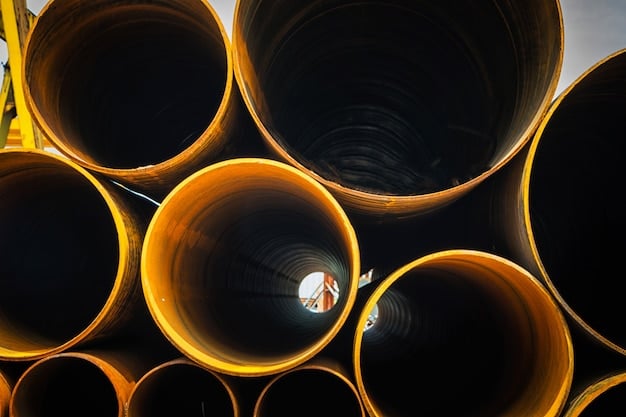
Oil Country Tubular Goods (OCTG) play a vital role in the lifecycle of oil and gas operations, serving as the backbone of exploration, drilling, production, and transportation processes. In this comprehensive exploration, we delve into the journey of OCTG, tracing its pivotal role at each stage of the oil and gas lifecycle.
From the depths of exploration wells to the sprawling infrastructure of production fields, OCTG companies stand as a testament to innovation and engineering excellence in the energy industry.
Exploration Phase
The journey of OCTG begins in the exploration phase, where geologists and engineers seek to identify potential oil and gas reserves beneath the earth’s surface. During this phase, OCTG is utilized in the drilling of exploration wells, enabling operators to penetrate the earth’s crust and extract core samples for analysis. Casing and tubing are deployed to maintain the integrity of the wellbore and facilitate the extraction of geological data essential for assessing the commercial viability of the reservoir.
Drilling Phase
The drilling phase commences as exploration yields promising results, marking the transition from discovery to extraction. OCTG plays a crucial role in drilling operations, serving as conduits for the extraction of hydrocarbons from the reservoir to the surface. Casing strings are installed to provide structural support and prevent collapse, while tubing strings facilitate the flow of oil, gas, and drilling fluids. Advanced OCTG technologies, such as premium connections and corrosion-resistant alloys, enhance drilling efficiency and ensure reliability in challenging downhole conditions.
Completion Phase
Following the drilling phase, the completion phase focuses on preparing the well for production. OCTG components, including casing, tubing, and downhole equipment, are carefully selected and installed to optimize reservoir performance and maximize recovery rates. Hydraulic fracturing techniques may be employed to enhance production from unconventional reservoirs, with OCTG playing a critical role in conveying proppants and fluids into the formation. In horizontal wells, OCTG provides the backbone for multistage fracturing operations, enabling precise reservoir stimulation and increased hydrocarbon recovery.
Production Phase
Once the well is completed, the production phase begins, marking the commencement of oil and gas extraction. OCTG components, such as production casing and tubing, serve as conduits for the flow of hydrocarbons from the reservoir to the surface facilities. Wellhead equipment, including casing heads and Christmas trees, are installed to control the flow of fluids and ensure safe and efficient production operations. OCTG is subjected to rigorous operating conditions, including high pressures, corrosive environments, and extreme temperatures, underscoring the importance of quality and reliability in OCTG selection.
Transportation and Distribution
Upon extraction, oil and gas must be transported from the production site to refineries and distribution centers for processing and distribution. OCTG pipelines form the backbone of the transportation infrastructure, conveying crude oil, natural gas, and refined products over vast distances with efficiency and reliability. From gathering and transmission pipelines to distribution networks and export terminals, OCTG plays a pivotal role in facilitating the movement of energy resources from source to market.

Maintenance and Integrity Management
Throughout the lifecycle of oil and gas operations, OCTG undergoes rigorous inspection, maintenance, and integrity management to ensure continued reliability and safety. Advanced inspection techniques, including electromagnetic inspection and ultrasonic testing, are employed by OCTG pipe manufacturers to detect defects and degradation in OCTG components. Corrosion prevention measures, such as cathodic protection and corrosion inhibitors, are implemented to mitigate the risk of pipeline failures and ensure asset integrity. By prioritizing proactive maintenance and integrity management, operators can extend the service life of OCTG assets and minimize the risk of costly downtime and environmental incidents.
Environmental Considerations
In an era of increasing environmental awareness and regulatory scrutiny, OCTG operators must prioritize environmental stewardship and sustainable practices. OCTG materials and coatings are selected to minimize environmental impact and ensure compliance with regulatory requirements. Leak detection and monitoring systems are deployed to detect and mitigate spills and emissions, safeguarding the environment and surrounding communities.
Additionally, efforts to reduce greenhouse gas emissions and minimize environmental footprint are driving innovation in OCTG design and operation, with a focus on energy efficiency and carbon reduction. Equipment such as reinforced plastic pipes plays an important part in this process.
Qualities of OCTG
Oil Country Tubular Goods (OCTG) are engineered to meet stringent requirements for durability, performance, and reliability in demanding oil and gas environments. The qualities that OCTG, such as reinforced thermoplastic pipes require are essential to ensure safe and efficient operations throughout the lifecycle of oil and gas operations.
Strength and Structural Integrity
OCTG components must exhibit exceptional strength and structural integrity to withstand the extreme conditions encountered during drilling, completion, and production. High-strength materials and precise manufacturing processes are employed to ensure that OCTG can withstand high pressures, temperatures, and mechanical stresses encountered in downhole environments. Additionally, the seamless integration of OCTG by OCTG pipe suppliers into well designs and completion systems ensures optimal performance and reliability.
Corrosion Resistance
Corrosion is a significant challenge in oil and gas operations, particularly in environments with high levels of hydrogen sulfide (H2S) and carbon dioxide (CO2). OCTG must possess excellent corrosion resistance to prevent degradation and maintain structural integrity over extended periods of operation. Corrosion-resistant alloys (CRAs) and protective coatings are applied to OCTG components to mitigate the risk of corrosion and ensure long-term reliability for oil and gas equipment and services. Moreover, rigorous quality control measures and adherence to industry standards further enhance the corrosion resistance of OCTG.

Compatibility with Downhole Fluids
OCTG must be compatible with the various fluids encountered in downhole environments, including drilling muds, completion fluids, and produced hydrocarbons. Compatibility is essential to prevent chemical interactions that could compromise the integrity of OCTG components or impair production efficiency. Advanced metallurgy and material selection ensure that OCTG maintains compatibility with downhole fluids while minimizing the risk of corrosion and degradation. Furthermore, continuous research and development efforts focus on enhancing the chemical resistance of OCTG materials to accommodate increasingly challenging reservoir conditions for oil and gas solutions.
Tightness and Leak Prevention
Leakage of fluids from OCTG components can pose safety hazards and environmental risks, as well as result in costly production losses. OCTG must exhibit tightness and leak prevention capabilities to ensure the containment of fluids under high pressures and temperatures. Precision machining, stringent quality control measures, and advanced sealing technologies are employed to achieve tight tolerances and prevent leaks in OCTG components.
Additionally, comprehensive testing protocols, including hydrostatic testing and non-destructive examination, verify the integrity and leak tightness of OCTG before deployment in the field. Reinforced thermoplastic pipe suppliers have a strong responsibility in this aspect.
Thermal Stability
OCTG components are subjected to wide variations in temperature during drilling, completion, and production operations. Thermal stability is essential to ensure that OCTG maintains its mechanical properties and dimensional stability under extreme temperature conditions. Advanced heat treatment processes and alloy selection optimize the thermal stability of OCTG components, allowing them to perform reliably in high-temperature environments encountered in deep wells and thermal recovery operations.
Furthermore, the application of thermal insulation materials and coatings further enhances the thermal performance and longevity of OCTG in challenging operating environments.
Compatibility with Wellbore Fluids and Completion Techniques
OCTG must be compatible with various wellbore fluids, completion techniques, and production enhancement methods employed in oil and gas operations. Compatibility ensures that OCTG components can withstand the effects of hydraulic fracturing, acidizing, and other completion techniques without compromising their integrity or performance. Flexible design options and customization capabilities enable OCTG to meet the specific requirements of different wellbore conditions and completion strategies.

Moreover, ongoing collaboration between OCTG manufacturers, operators, and service providers ensures continuous innovation and optimization of OCTG designs to meet evolving industry challenges and maximize operational efficiency for oilfield tubular goods.
By incorporating these qualities into OCTG design and manufacturing processes, operators can ensure the reliability, safety, and efficiency of oil and gas operations throughout the lifecycle of energy production. From exploration and drilling to production and transportation, OCTG plays a critical role in unlocking and harnessing energy resources to meet global demand.
Conclusion
Oil Country Tubular Goods (OCTG) are integral to the lifecycle of oil and gas operations, serving as essential components in exploration, drilling, production, transportation, and distribution processes. From the depths of exploration wells to the sprawling infrastructure of production fields, OCTG plays a pivotal role in unlocking energy resources and powering the global economy. As the energy industry continues to evolve, OCTG will remain at the forefront of innovation and engineering excellence, driving efficiency, reliability, and sustainability in oil and gas operations. By understanding the journey of OCTG through the oil and gas lifecycle, stakeholders can optimize performance, mitigate risk, and ensure the responsible development and utilization of energy resources for generations to come.
Ready to revolutionize your energy infrastructure? Contact CNPS today for premium solutions, including fiberglass pipes, reinforced thermoplastic pipes, and more. Let’s power the future together!