

As the energy industry tackles growing demands and intensifies its operations, the choice of infrastructure materials becomes critical. Oilfield operations—known for their demanding environments with high pressures, corrosive substances, and extreme temperatures—rely heavily on resilient, durable, and efficient systems to maintain smooth performance.
One question that often arises is: how can we optimize pipelines to withstand these challenges while also reducing costs and improving longevity? The answer, increasingly, lies in fiberglass piping.
At CNPS, we specialize in providing comprehensive energy solutions that meet the exacting needs of the oil and gas industry. From innovative piping systems to highly durable materials, our offerings enable energy companies to build robust infrastructure capable of enduring the intense conditions of oilfields.
This blog will explore the features, benefits, and growing demand for fiberglass piping in modern oilfield infrastructure. With enhanced corrosion resistance, high strength-to-weight ratio, and longer service life, fiberglass pipes offer substantial advantages over traditional materials. Let’s take a closer look at why fiberglass piping has emerged as the top choice for the energy sector.
Why Fiberglass Piping is Ideal for Oilfield Infrastructure
Fiberglass piping, manufactured using a highly controlled filament-winding process of epoxy resin and high-strength glass fibers, provides a seamless, durable product without layering—a crucial feature that prevents common issues like delamination. The demand for this high-performance material is driven by multiple factors:
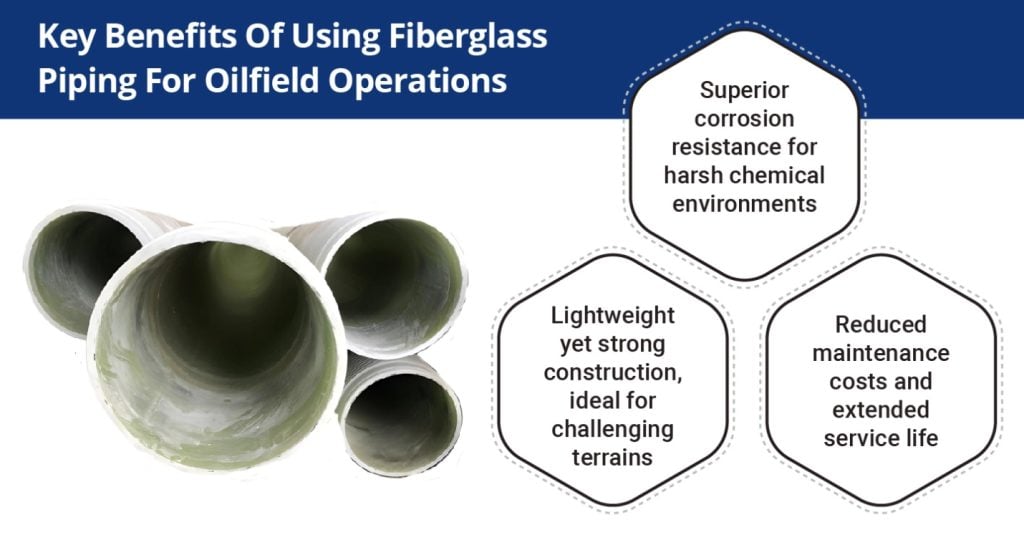
- Superior Corrosion Resistance: Oilfields frequently involve the transportation of aggressive chemicals and hydrocarbons. Traditional materials, like steel, suffer from corrosion when exposed to these elements, leading to increased maintenance costs and downtime. Fiberglass piping is inherently resistant to corrosion, which reduces the need for repairs or replacements over time.
- Lightweight Yet Strong: Fiberglass pipes are lightweight compared to steel and other traditional materials. This makes them easier to transport, handle, and install, leading to lower installation costs and faster project timelines. Despite their light weight, they offer high tensile strength, enabling them to withstand the high pressures common in oilfield environments.
- Extended Service Life: Traditional materials are more vulnerable to wear and environmental degradation, while fiberglass pipes are specifically designed to last longer in the field. With proper maintenance, fiberglass piping can remain in service for decades, reducing replacement costs and minimizing environmental impact.
- Reduced Maintenance Requirements: Unlike steel, which requires regular inspections and coatings to prevent corrosion, fiberglass piping needs minimal maintenance, allowing oilfield operations to function more smoothly and without frequent service interruptions.
Key Benefits of Fiberglass Piping for the Energy Industry
Fiberglass piping offers multiple benefits that make it particularly suited to the energy sector. Let’s break down the key advantages that fiberglass piping offers in the challenging environment of oilfields.
1. High Pressure Tolerance
Fiberglass piping is built to endure high-pressure environments common in oilfields. Designed through a process that creates a uniform structure, fiberglass piping maintains its integrity under significant pressure without cracking, delaminating, or degrading. This makes it a reliable choice for transporting oil, gas, and other high-pressure fluids safely and efficiently.
2. Resistance to Chemicals and Corrosion
In oilfield environments, exposure to corrosive chemicals and hydrocarbons is constant. Fiberglass piping provides unmatched resistance to these chemicals, maintaining its strength and durability in conditions that would quickly degrade traditional materials. This resistance extends the lifespan of the piping and minimizes leaks, which can pose environmental and safety risks.
3. Low Weight, High Strength
The lightweight nature of fiberglass piping simplifies transport and installation in remote and challenging locations, significantly reducing labor and installation costs. Additionally, its high strength-to-weight ratio allows fiberglass pipes to withstand substantial stresses without requiring additional supports, making it an ideal choice for high-performance oilfield infrastructure.
4. Thermal Stability and Insulation Properties
Fiberglass piping offers excellent thermal stability, which is essential for operations involving extreme temperatures. Its low thermal conductivity also provides natural insulation, reducing the need for additional insulation layers and allowing efficient transport of temperature-sensitive fluids. This thermal stability helps maintain safe operating conditions and minimizes heat loss during transport.
5. Long-Term Cost Savings
While fiberglass piping can have a higher upfront cost compared to some traditional materials, the reduction in maintenance, extended service life, and lower installation costs result in significant savings over time. Companies looking to minimize their operational expenses and ensure a sustainable infrastructure find fiberglass piping to be a cost-effective, long-term solution.
Applications of Fiberglass Piping in Oilfield Infrastructure
Fiberglass piping has found applications across various aspects of oilfield operations. Here are some of the key areas where fiberglass piping has proven beneficial:
- Fluid Transport Lines: Fiberglass pipes are widely used to transport oil, gas, and other fluids across oilfields, thanks to their durability and pressure tolerance.
- Produced Water Lines: Produced water is a byproduct of oil extraction that often contains corrosive chemicals. Fiberglass piping’s resistance to these chemicals makes it an ideal choice for transporting produced water.
- Flow Lines: Flow lines, which carry extracted oil and gas from the wellhead to processing facilities, are often exposed to extreme conditions. Fiberglass piping ensures reliable performance in these demanding applications.
- Saltwater Disposal Lines: Saltwater disposal requires piping materials that can handle the corrosive nature of saline solutions. Fiberglass pipes are well-suited for this purpose, providing a corrosion-resistant solution that reduces maintenance costs.
How Fiberglass Piping Compares to Traditional Materials
To fully understand the benefits of fiberglass piping, it’s useful to compare it to traditional materials commonly used in oilfields:
- Steel: While steel has traditionally been used in oilfields, it is prone to corrosion and requires protective coatings and frequent inspections. Fiberglass piping, in contrast, naturally resists corrosion, reducing maintenance needs and offering a longer lifespan.
- Concrete: Concrete is durable but lacks the flexibility and corrosion resistance of fiberglass. It is also significantly heavier, making it more challenging to install and transport, especially in remote locations.
- Plastic: Certain plastics may be lightweight and corrosion-resistant, but they lack the strength needed for high-pressure applications. Fiberglass pipes combine the strength of steel with the corrosion resistance of plastic, making them a superior option for oilfield infrastructure.
Key Considerations When Choosing Fiberglass Piping
When selecting fiberglass piping for oilfield infrastructure, companies must consider several factors to ensure optimal performance:
- Pressure Requirements: Fiberglass piping is available in various pressure ratings. It’s essential to choose a pipe that matches the specific pressure demands of the application.
- Chemical Compatibility: While fiberglass is resistant to most chemicals found in oilfields, selecting the appropriate resin can enhance performance against particular chemicals or substances.
- Temperature Tolerance: Fiberglass piping offers good thermal stability, but selecting a resin compatible with the maximum operating temperature of the oilfield environment is critical.
- Compliance and Standards: Ensuring that fiberglass piping meets industry standards is essential for safety and regulatory compliance. Reputable fiberglass pipe manufacturers like CNPS design their products to meet these standards, ensuring safe and reliable performance.
How Fiberglass Piping Enhances Safety and Sustainability
Safety and sustainability are increasingly critical in the oil and gas industry. Fiberglass piping contributes to both by offering enhanced durability, reduced risk of leaks, and minimal maintenance requirements. By reducing the frequency of repairs and replacements, fiberglass piping lowers the risk of environmental contamination and minimizes the carbon footprint associated with maintenance operations.
Additionally, fiberglass piping’s long lifespan and resistance to corrosion help reduce material waste, aligning with the energy sector’s goals for more sustainable operations. By choosing fiberglass piping, companies can achieve a safer, more sustainable infrastructure that supports efficient and responsible energy production.
Is Fiberglass Piping Right for Your Oilfield Project?
Fiberglass piping has transformed the oil and gas sector by offering a high-strength, corrosion-resistant, and cost-effective alternative to traditional materials. Its advantages in terms of longevity, reliability, and reduced maintenance requirements make it an ideal choice for modern oilfield infrastructure.
At CNPS, we understand the unique demands of the energy sector. With our expertise in high-quality fiberglass piping and other essential infrastructure solutions, we help companies build resilient, efficient systems tailored to the challenges of today’s oilfields. By choosing CNPS, you gain access to industry-leading products backed by a commitment to safety, quality, and innovation.
Explore CNPS’ range of high-performance fiberglass pipes and other energy solutions today. Whether you’re seeking to upgrade existing infrastructure or planning a new project, our team is here to provide the expertise and support you need for a successful, efficient operation. Get in touch with us to learn more about how our fiberglass piping can enhance your oilfield infrastructure and bring long-term benefits to your operation.


