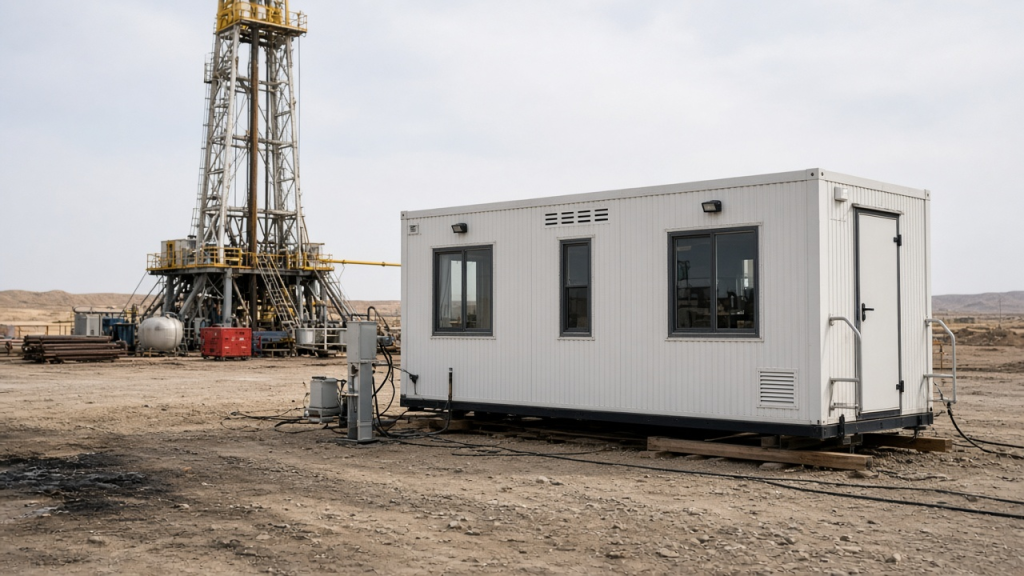
A roughneck is a floor-crew member on a drilling rig (land or offshore) who handles tubulars, assists make-up and break-out of the drill string, and keeps the rotary table area moving under the driller’s direction. The search phrase what is a roughneck often starts as a career question; for operators, EPCs, and equipment buyers it is also a map of who touches which kit when the well is being drilled.
CNPS supplies oilfield equipment along the well lifecycle — OCTG, mud logging, drilling intelligence, and related packages under oil & gas solutions. This article is the commercial companion to the existing role overview at What Is a Roughneck on an Oil Rig: it connects crew language to RFQ language, without inventing wages, headcount SKUs, or site HSE certificates.

” alt=”Roughnecks handling drill pipe on a land rig drill floor” />
Roughneck vs the rest of the drilling crew
| Role | Where they work | What buyers hear them talk about |
|---|---|---|
| Roughneck | Drill floor / monkey board support as scoped | Tong work, slips, pipe handling, mud on the floor, iron roughneck interfaces |
| Derrickhand | Derrick / monkey board | Stabbing, racking, stand handling |
| Driller | Doghouse / console | WOB, RPM, pump pressure, well control cues |
| Toolpusher / company man | Site management | Program, NPT, contractor interfaces |
If your RFQ still says “rig crew gear” with no stage or interface, quotes will scatter. Name the operation (tripping, drilling ahead, casing run) and the equipment family (drill pipe / HWDP, casing, mud returns, surface logging), not only the job title.
What roughnecks actually do on the floor
Day-to-day work is physical and procedure-bound:
- Pipe handling — pick up, set slips, make up / break out connections with tongs or an iron roughneck; trip pipe in and out of the hole as the program requires.
- Floor housekeeping and mud awareness — keep walkways clear; watch for mud, cuttings, and trip-tank cues that matter for well control and solids handling.
- Assist the driller — follow signals for speed, torque, and connection timing; support BOP drills and lockout steps as the site procedure defines.
- Equipment readiness — inspect tongs, elevators, slips, and related iron before a tour; report defects instead of improvising.
None of that replaces a written procedure or a certified well-control plan. It does explain why buyers who only specify “API drill pipe” without connection, grade, inspection level, and delivery window still get mismatched offers — the floor crew lives those details every tour.

” alt=”Drill-floor workflow: slips, tongs, make-up, trip tank cues” />
Equipment touchpoints that show up in real RFQs
Roughneck work sits next to several CNPS catalogue paths. Use the crew term as a locator, then write the technical brief:
Tubulars the floor actually handles
Drill pipe, HWDP, collars, and later casing/tubing strings are the most visible roughneck interface. For procurement, separate:
- Drill-string goods — size, weight, grade, connection, inspection class, quantity, destination.
- Casing / tubing (OCTG) — API grade family, end finish, well conditions (H2S, HPHT flags if known), running sequence.
Start from the OCTG path when the RFQ is tubular-led. Do not paste a job title into the line-item description and call it a specification.
Mud, cuttings, and surface visibility
When the bit is making hole, roughnecks work in the same circulatory system that feeds shale shakers, degassers, and the mud-logging cabin. Surface data (cuttings, gas, drilling parameters) is a different SKU family from tongs — see mud logging and the mud logging unit product page. If the enquiry is “we need better shows while drilling,” write surface logging scope, not “roughneck tools.”
Well construction context
Casing runs, cementing windows, and completion prep change what the floor handles next. Keep the well-program timeline in the brief so tubular, cementing, and logging packages are not quoted against the wrong phase. Background: oilwell drilling overview and the oil & gas solutions map.

” alt=”Map of roughneck touchpoints to OCTG, mud returns, and surface logging” />
Buyer checklist (use before you open a quote)
Copy this into the enquiry notes — not as marketing adjectives:
- Operation — drilling ahead, trip, casing run, or workover; land vs offshore footprint.
- Tubular scope — OD/weight/grade/connection; inspection; quantity; Incoterms / destination.
- Mud / solids / logging — whether surface logging, gas detection, or cabin scope is in or out.
- Interfaces — iron roughneck vs manual tongs (site preference); any third-party rental iron.
- Documents — MTRs, inspection reports, packing lists, and any customer standard named explicitly.
- Schedule — need-by date and whether partial shipments are allowed.
Missing any of the first four usually forces a clarification round. Put known fields in the request a quote form so technical review can flag gaps instead of guessing.

” alt=”Buyer RFQ checklist tied to drill-floor operations” />
Career page vs this buyer guide
CNPS already publishes a role-and-path overview: What Is a Roughneck on an Oil Rig. Keep that URL for duties, environment, and advancement language. Use this article when the visitor’s next step is equipment or a project enquiry — tubulars, mud logging, or a multi-category oil & gas brief.
We do not invent salary bands, crew-day rates, or regional labor law claims here. Those belong in HR or contract documents, not in an equipment RFQ.
How to enquire without over-fitting the job title
- State the well phase and location type.
- List the equipment families (OCTG / drill pipe, mud logging, other) with the fields above.
- Attach any customer spec or prior PO language you already trust.
- Submit via Request a Quote or sales@cnps.com.
A roughneck is the person on the iron; your RFQ should still speak in standards, dimensions, media, and documents. That is how floor reality and commercial scope stay aligned.
—
Word count target: ~950–1100 (body). Do not auto-publish. Draft / PR preview only; human gate on production.