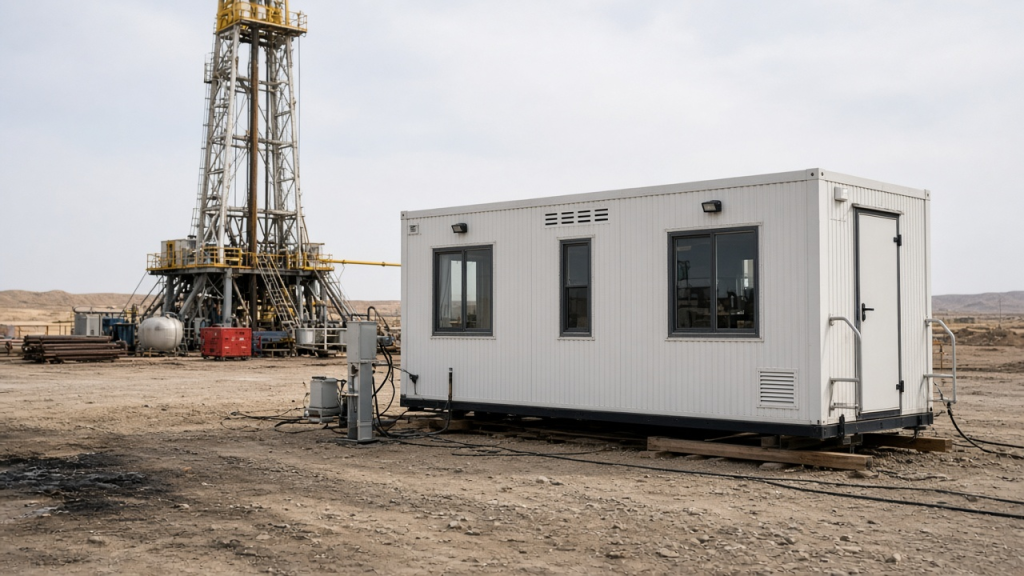
An FRP tank oilfield decision is not a catalogue swap for “a plastic tank.” It is a duty-first materials and layout problem: what you store (produced water, brine, chemicals, wash water), at what temperature and vapor profile, with what hydrostatic head and nozzle plan, and which liner/resin system plus QC documents you will accept before installation. Operators, EPC facilities engineers, and procurement teams who already understand GRE/FRP pipe still need a clear frame for GRE FRP storage tank selection—because tanks fail differently from lines: liner blistering, nozzle leaks, vapor-space attack, and undocumented hydrostatic or holiday-test language dominate field pain more than “wall thickness slogans.”
This article owns that tank selection path. It complements—not replaces—line-pipe guidance:
- Medium / corrosion drivers for pipe — Fiberglass Pipe vs Steel Corrosion
- Envelope for line pipe — How to Spec GRE/FRP Line Pipe
- Pipe joints — FRP pipe joint types
- Pipe RFQ package — FRP pipe RFQ checklist
CNPS frames nonmetallics as a system—see Fiberglass Pipe Systems: FRP, GRP and GRE and the tanks hub Fiberglass Tanks and Products. Naming reminder from What is the Difference between GRP and GRE Pipes?: FRP is the broad family; GRP names glass reinforcement; GRE names glass + epoxy. For tanks, buyers more often say FRP tank or fiberglass chemical tank; resin family (epoxy, vinyl ester, polyester, and project-cited alternatives) still must be matched to the medium—labels are not a guarantee.
What “FRP tank oilfield” duty actually includes
Oilfield tanks are not one product. Tags that drive FRP tank produced water and chemical storage talks include produced-water/brine storage, wash/utility water, chemical day tanks (inhibitors, demulsifiers, acids, solvents, biocides—see oilfield chemicals problem-to-product map), intermediate hold/skim vessels, and closed or vented vapor-space duties.
Fiberglass chemical tank oilfield selection fails when teams copy a produced-water resin reference onto an acid or solvent day tank—or when they specify the shell and forget nozzle laminate, gasket, and manway as wetted parts.
Operating condition → tank type → liner/resin (first-principles sequence)
1) Freeze the duty dossier before the tank slogan
Write one controlled sheet for every tank tag: medium (chemistry, chlorides, oil cut, solids, O₂/CO₂/H₂S if relevant, cleaning fluids); temperature (fluid/ambient, including hot-cleaning excursions); level / hydrostatic (design level, SG basis, atmospheric vs light pressure / vacuum-sensitive empty cases); vapor space (open, conservation, N₂ blanket, or VRU—vapor often differs from liquid); install setting (AG/bermed/indoor, UV, wind/seismic notes, foundation); nozzle / instrumentation plan (inlet, outlet, drain, overflow, vent, manway, level, temperature, sample, mix).
Incomplete chemistry is the most common reason a fiberglass chemical tank is blamed later for a liner or elastomer mismatch. If chemistry is open, say so and require suppliers to state assumptions in writing.
2) Separate “corrosion of steel” from “compatibility of composites”
Steel tanks lose metal to saline produced water, oxygenated wash water, and aggressive chemicals. FRP tanks move the problem to resin, veil/liner, and elastomer compatibility. A medium that pushes you off carbon steel (see fiberglass pipe vs steel corrosion) does not automatically bless one FRP construction. Require the offer to name liner/resin family against your medium list—not against a generic “oilfield water” brochure line.
3) Choose tank geometry and construction class for the duty—not the catalogue hero image
Common industrial FRP tank families buyers encounter (names vary by maker; treat these as selection categories, not invented standards):
| Selection factor | What to decide | Why it matters in oilfield service |
|---|---|---|
| Orientation | Vertical vs horizontal | Footprint, nozzle access, sludge drain, transport limits |
| Roof / cover | Open-top, flat, dome, or process cover | Vapor control, rain, UV, manway access |
| Shell construction | Hand lay-up / filament / contact-molded combinations as offered | Structural vs chemical barrier roles must both be clear |
| Liner / barrier | Resin-rich liner, veil, dual laminate notes as offered | Primary chemical defense for FRP tank produced water and chemicals |
| Supports | Skirt, legs, saddles, flat bottom on pad | Foundation and settlement loads |
| Secondary containment | Bund, double-wall, or site berm (project choice) | Spill rules and operator standards—not assumed by “FRP” |
Do not invent UL/API tank edition claims on this page. If a project cites a tank standard or company tank spec, put that citation on the RFQ and require the offer to match as published—same evidence discipline used for pipe API 15HR/15LR language.

Liner, resin, and elastomer: the real chemical boundary
For GRE FRP storage tank selection, treat three layers as one wetted system:
- Chemical barrier (liner / veil / resin-rich layer) — must match liquid chemistry and cleaning fluids.
- Structural laminate — carries hydrostatic and handling loads; resin may differ from the barrier in some constructions—ask explicitly.
- Nozzle, manway, and gasket materials — flanges, O-rings, and manway seals see the same medium; a liner that works does not automatically bless the gasket.
Practical buyer rules: for produced water / brine, prioritize chloride and oxygen assumptions plus empty/wet cycles and biocide/scavenger batches; for acids / specialty chemicals, match actual concentration and temperature—do not extrapolate from a PW reference; for solvents / aromatics, treat permeation and elastomer swell as first-order and require stated compatibility or “not offered”; for hot service, state max continuous and excursion separately. If the supplier cannot name barrier resin and gasket materials against your list, you do not yet have a comparable bid.
Nozzle layout and mechanical interfaces (where tanks leak)
FRP tank nozzles liner QC conversations should start at the drawing, not at the hydrotest certificate.
Lock these on the GA / nozzle schedule before purchase:
- Nozzle list — size, rating/facing basis, elevation, orientation, and duty (process vs instrument).
- Reinforcement — how nozzle cut-outs are reinforced; request the maker’s standard detail for your diameter and pressure class (as offered).
- Manway — size, gasket, and access for inspection/cleaning.
- Drain and sludge — low-point drain design for PW solids; avoid “dead sump” that never empties.
- Vent and overflow — sized and material-compatible; vapor-space corrosion is a separate risk from liquid liner.
- Level / temp taps — avoid ad-hoc field drilling after delivery when possible.
- Pipe interface — how FRP tank nozzles meet GRE/FRP or steel pipe (flange facing, gasket, torque language). For pipe joint families, see FRP pipe joint types.

A clean shell with a poorly reinforced nozzle or wrong gasket is still a leak path. Score bids on the nozzle schedule completeness, not only on unit price per barrel of capacity.
QC documents buyers should request (evidence-gated)
Do not invent lab values, holiday-test voltages, or certificate numbers here. Require the document types that make offers comparable:
| Document / evidence | What it should let you verify |
|---|---|
| GA + nozzle schedule | Dimensions, nozzle list, weights, foundation loads as offered |
| Construction / laminate description | Barrier resin family, structural resin notes, veil/liner description |
| Material compatibility statement | Medium list vs offered liner + elastomers (assumptions stated) |
| ITP / inspection plan | What is checked at shop (dimensions, visual, hardness/Barcol if used, holiday/spark test if offered) |
| Hydrostatic / leak-test language | Test medium, fill height/basis, hold time as offered—not invented here |
| Handling / install / UV notes | Lift points, support, grounding/bonding if required by project, UV protection |
| Traceability / CoC–CoA style pack | As offered for that construction—verify contents at quote time |
| Spare gasket / manway kit list | Consumables that match the wetted materials |
Reject offers that answer only “FRP tank, XX m³, competitive price” with no medium basis and no nozzle drawing.

RFQ questions that force comparable FRP tank bids
Use these as a short addendum when you buy tanks (pipe RFQ discipline still lives in the FRP pipe RFQ checklist):
- What barrier resin / liner and elastomer materials are offered against the attached medium list (including cleaning fluids)?
- What is the design liquid level, SG basis, and vapor-space assumption used for structural sizing?
- Provide a nozzle schedule with reinforcement notes and manway gasket material.
- What shop tests (visual, dimensional, holiday/spark if applicable, hydro/leak) are included, with acceptance language as you publish them?
- What are UV, foundation, and lifting requirements and excluded site works?
- What documents ship with the tank (GA, CoC/CoA-style pack, ITP records, install notes)?
- Are dual-laminate or special liners required for any chemical on the list—or is that tag “not offered”?
- Lead time, packing, and spare gasket/manway kit—stated separately from shell price.
What FRP tanks do not automatically solve
Be explicit: wrong liner or gasket still fails; underspecified vapor space can attack roofs while the liquid liner looks fine; solids without drain design become OPEX; foundation and wind/seismic remain project responsibilities; fire or metal-only company tags can override the corrosion logic; marketing URLs are anchors to verify at quote time—not substitute datasheets.
Selection table: duty → focus → RFQ emphasis
| Oilfield duty | Medium-first focus | Tank / liner emphasis | RFQ emphasis |
|---|---|---|---|
| Produced water / brine storage | Chlorides, O₂, solids, intermittent level | Barrier for saline PW; drain/sludge; UV | Medium dossier + hydro language + nozzle drain |
| Chemical day tank (inhibitors, demulsifiers) | Exact chemical + concentration + T | Matched liner + elastomer; secondary containment plan | Compatibility statement + spare seals |
| Acid / specialty chemical | Concentration, temperature, fumes | Often stricter barrier; vapor-space materials | Explicit “offered / not offered” by grade |
| Wash / utility water | Milder chemistry; still UV and nozzles | Standard industrial FRP as offered | GA completeness + install notes |
| Closed process hold tank | Level cycles + vapor recovery tie-in | Roof/vent design + instrumentation nozzles | Vent/overflow + instrument tap schedule |

FAQ
When should an oilfield site choose an FRP tank over steel?
When the stored medium (especially saline produced water, oxygenated wash streams, or aggressive chemicals) makes steel corrosion allowance, lining repair, or leak risk dominate—and a compatible FRP liner/resin/elastomer system is available inside the project’s temperature, hydrostatic, and vapor assumptions. It is a lifecycle and compatibility decision, not a brand preference.
Is an FRP tank automatically OK for all produced water?
No. FRP tank produced water service still needs a stated medium basis (chlorides, O₂, H₂S/CO₂ if relevant, solids, cleaning chemicals) and a matching barrier plus nozzle/gasket materials. “Oilfield FRP tank” without that dossier is not a specification.
What is the difference between FRP, GRP, and GRE for tanks?
FRP is the broad fiber-reinforced plastic family. GRP emphasizes glass reinforcement. GRE names glass + epoxy systems (more often discussed for pipe). For tanks, buyers should lock barrier resin family and construction description on the offer, not assume the acronym alone defines chemical resistance. See GRP vs GRE naming.
Which QC checks matter most before accepting an FRP tank?
Drawing/nozzle schedule fidelity, stated liner/resin and elastomer against your medium list, and the supplier’s published shop inspection and leak/hydro language. Holiday/spark or hardness checks matter when offered and specified—do not invent acceptance numbers on the blog page; put project numbers on the RFQ.
What should I send to get a comparable FRP tank quote?
Duty dossier (medium, T, level/SG, vapor), capacity and orientation, nozzle/instrument list, site/UV/foundation notes, document pack required, and any company tank standards as cited on the project. Ask for system completeness (shell + nozzles + gaskets + docs), not litre price alone.
Next step
If produced-water corrosion, chemical day-tank leaks, or thin EN tank selection guidance is already slowing RFQs, freeze the duty dossier and nozzle list, then request an FRP tank oilfield system path with liner compatibility and QC documents—not a capacity number alone. CNPS can help map the duty to a construction and the evidence that belongs with it: Talk to an Engineer · Talk to the right team · sales@cnps.com. Related hubs: Fiberglass Tanks and Products · Fiberglass Pipe Systems.